The Bletchley Park Times magazine
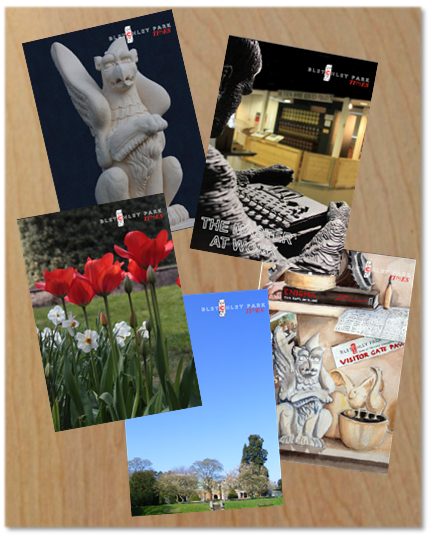 Shortly after Simon Greenish took up the reigns as Director of Bletchley Park in 2006 along with getting to grips with the leaking roofs, poor power and water supplies and mounting debts, he also found that the Park provided a newsletter to volunteers and the ‘Friends of the Park’, the latter consisting largely of veterans from the WW2. There were other members who paid an annual subscription to be a ‘Friend’ but the income from the donations was low. The work to produce the newsletter was becoming too much for the skeleton full time staff to prepare when so many other jobs needed more urgent attention.
Simon asked the volunteer community for assistance in producing the newsletter. I had previously worked as Technical Editor for a computer magazine and having produced documentation throughout my IT career, I volunteered my services. Following a brief interview with Simon, I found I was the successful and probably only applicant! Simon presented an outline of what he envisaged for the newsletter:
- It had to have a distinct style so it was recognisable as being the official Bletchley Park news platform for the ‘Friends’ and volunteers – he used an example publication from another nearby visitor attraction.
- The newsletter should have a mix of articles that would prove interesting across the broad spectrum of the readers, but particularly appeal to the veterans,
- The tradition of informing readers of current events, changes and future plans to Bletchley Park should be continued to feed their passion for seeing the preservation and growth of the site.
Shortly after this, I could add extra considerations to Simon’s list including the size of the text and the type face to use, taking into account that many readers probably had poor eyesight. Added to these were more basic considerations:
- What would be the optimal format be for space to contain articles versus postage size, weight and cost?
- Should the publication have a name?
- Would I be able to get any more articles?
- I would have to produce graphics and pictures to accompany the articles.
- How much will it cost to produce, bearing in mind the tight (or non-existent) budget?
The following weeks were crucial in getting the design, format and content mix together. But at least a name had been settled on, the Bletchley Park Times, to reflect on times past, present and future of the Park. Work began on sourcing and preparing material for publication and to produce a distinctive style. It was decided that an ‘A4’ size magazine would be the optimum for value with page space availability and cost of distribution. A friendly printer was identified – one that would offer a special price to the Park (on a tight budget)!
At last the first edition was ready and launched – well once the 2500 or so magazines had been diligently stuffed into envelopes, addressed and posted. It was no longer a 6 page newsletter, but had expanded into a magazine of 28 pages. The new design was well received by the readers. No time to reflect in this success as another edition was in the pipeline. The format and design largely remained constant for the next few years, although it did increase in thickness due to the quantity of material available for publishing.
The magazine featured stories about the Park, its history and exploits over the years with contributions from several veterans and Park stalwarts. The magazine even attracted article contributions from the likes of Professor Ian Stewart (professor of mathematics at the University of Warwick), Simon Singh (author, journalist and TV producer, specialising in science and mathematics) and Robert Churchhouse (Emeritus professor of Computing Mathematics at Cardiff University). Soon associations were made with other organisations including Eye Spy and US Naval Cryptolog magazines, the NSA and SPY museums in the US, RAF Chicksands, Royal Signals and Porthcurno museums in the UK, all providing a connection with Bletchley Park through articles.
By 2009 The Park was gaining in popularity much needed funding was starting to come in. The magazine needed a refresh to make it more commercial and modernise the design without sacrificing the mix of content and news that provided key information about the Park. A new design was launched, this time with a different cover for each edition and a less cluttered internal layout. This too was a well-received format change. Several testimonials for the magazine can be found here, but Lord Asa Briggs (historian and ex-code breaker) went further, writing in his book Secret Days – Code-Breaking in Bletchley Park:
Bletchley Park had to broaden its contacts and to change its style. In particular, there had to be a more positive and focussed approach to marketing and to publicity, [Simon] Greenish set out his plans in a new publication which was for more than an in-house journal, the Bletchley Park Times, which appeared twice a year. He found the right man to edit it, Philip Le Grand ….. who chose its name and shaped its content, setting out deliberately and imaginatively to broaden its appeal.
 Peridicom